New Funding Boosts Brain Cancer Research for Enhanced Treatment Efficacy
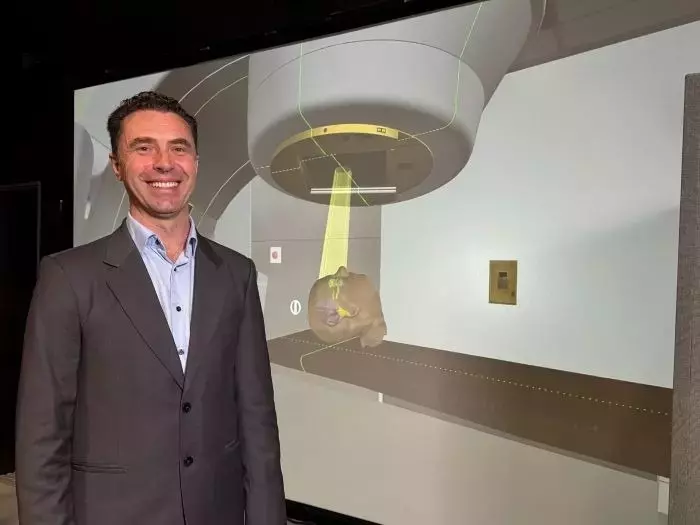
A significant financial investment has been made to propel groundbreaking research at Adelaide University, focused on revolutionizing brain cancer treatment. This initiative aims to enhance the efficacy of radiation therapy while concurrently reducing its detrimental effects on healthy brain cells. The project challenges long-held scientific assumptions in the field of radiation biology, signaling a crucial shift towards more precise and less invasive treatment modalities. This pioneering work seeks to unravel the complex interactions between radiation, tumor cells, and the body's immune system, potentially leading to improved survival rates and quality of life for patients.
Professor Ivan Kempson from Adelaide University is spearheading this innovative research. His team has been awarded 0,000 from the Mark Hughes Foundation Centre for Brain Cancer Research (MHF Centre) at the University of Newcastle. This substantial funding will establish an MHF Centre Innovation Node for Radiobiology, serving as a hub for advanced studies. This project represents the inaugural announcement under a new nationwide funding strategy, meticulously designed to foster greater collaboration among research institutions and accelerate the progression of promising brain cancer studies across Australia.
The core of this research is centered on radiation therapy, a widely utilized treatment for brain cancer. Despite its critical role, the precise mechanisms by which radiation impacts cancerous cells, healthy tissue, and the body's immune response remain incompletely understood. Professor Kempson, a biophysicist at Adelaide University's Future Industries Institute, emphasizes that much of the current understanding in radiation biology is rooted in studies conducted in the 1960s and 1970s. He highlights the necessity of re-evaluating these foundational concepts with contemporary scientific tools and knowledge. The research aims to delve into the cellular-level events triggered by radiation, challenging existing paradigms and seeking new insights.
A particularly exciting aspect of this project involves the deployment of specialized analytical instruments, which are the first of their kind in Australia. These cutting-edge tools enable researchers to quantify radiation-induced DNA damage with unprecedented accuracy. Given that DNA damage is a primary mechanism through which radiation eradicates cancer cells, gaining a detailed understanding of this process is crucial. The research team hopes to leverage this precision to develop strategies that intensify radiation's destructive impact on tumor cells while simultaneously safeguarding surrounding healthy brain tissue. Professor Kempson noted that their goal is to both amplify DNA damage within tumor cells and protect the DNA of normal cells.
In addition to DNA damage, the team is also exploring the intricate ways radiation influences the immune system. A growing body of evidence suggests that the body's intrinsic immune response plays a vital role in combating brain cancer. However, the precise effects of radiation on immune cells within a tumor environment are still largely unknown. To address these critical questions, Professor Kempson's group is engaged in a collaborative effort with clinicians at the Royal Adelaide Hospital. This collaboration allows them to conduct research in a clinical setting, utilizing the same high-energy equipment employed for patient treatments. This real-world approach provides unique insights that would be unattainable through conventional laboratory experiments alone.
The devastating impact of brain cancer underscores the urgency of such research. With survival rates remaining largely unchanged over the past 35 years and only two out of ten patients surviving beyond five years, new breakthroughs are desperately needed. Brain cancer claims more children's lives than any other disease and affects more individuals under 40 than any other cancer type. Despite its profound societal burden, brain cancer research receives less than five percent of federal cancer research funding in Australia, highlighting a significant disparity between the disease's impact and the resources allocated to combating it. This new funding and collaborative approach signify a critical step forward in addressing this pressing medical challenge, aiming to build comprehensive knowledge that can lead to more effective treatments and ultimately, improved patient outcomes.