Riz Ahmed's Journey: Art, Identity, and Reinvention
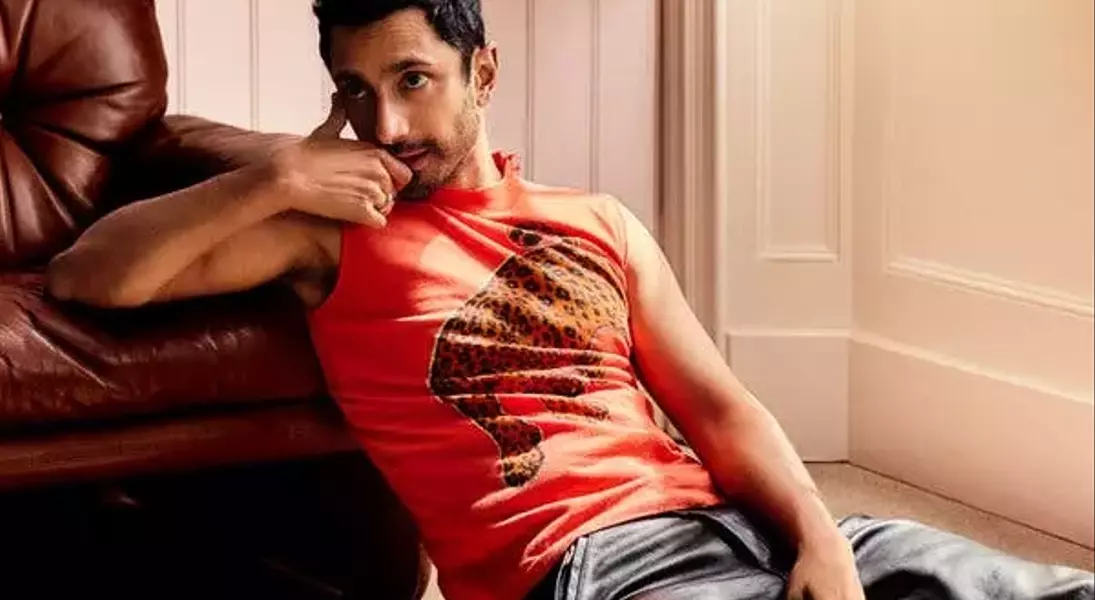
Embrace Change, Defy Expectations, Redefine Your Narrative.
The Formative Years: Provocation and Early Success
In 2006, the British Pakistani artist Riz Ahmed launched his single, \"Post-9/11 Blues.\" The accompanying video, featuring a neon green clown wig and Ahmed nonchalantly avoiding a fighter jet on a London street, showcased his early audacious style. In the song, he provocatively rapped about the irony of profiting from roles as terrorists post-9/11. This bold creation, made before his widespread fame, foreshadowed his career-long willingness to embrace transformation, a trait that would later lead him to become the first South Asian Muslim to win an Oscar and an Emmy.
The Artistic Creed: Selflessness in Creation
Ahmed views creative collaboration as a profound exchange, describing storytelling as an ancient method for human connection. He recognizes that while ego might initiate an artist's journey, true performance transcends self-absorption, shifting focus from personal acclaim to the shared experience of the art itself. He believes genuine creativity, in its egoless and immaterial nature, stands in stark contrast to the materialism prevalent in society.
A Glimpse into the Artist's Life: Family and \"Relay\"
Ahmed, now 42, recently visited New York with his novelist wife, Fatima Farheen Mirza, 34, and their young child for the premiere of his new espionage thriller, \"Relay.\" Despite arriving slightly late but full of enthusiasm, Ahmed, with his bright brown eyes, radiated energy and intellectual curiosity during our conversation. His commitment to his family and his latest film project were clearly at the forefront of his mind.
A Trajectory of Accomplishment: From Oxford to Oscar
Ahmed's career took off after studying politics, philosophy, and economics at Oxford. The 2005 London Underground bombings spurred his creation of \"Post-9/11 Blues,\" which quickly went viral and led to his first film role in \"The Road to Guantánamo\" (2006). His critically acclaimed performances continued, earning him an Emmy for \"The Night Of\" (2016) and an Academy Award nomination for \"Sound of Metal\" (2019). Beyond acting, he has produced an Oscar-winning short film and a concept album, both titled \"The Long Goodbye\" (2020), and has several new projects underway, including an Amazon original series and a film adaptation of \"Hamlet.\"
Navigating Identity: From Spokesperson to Individual Artist
For Ahmed, a dedicated artist with a strong work ethic, his increasing success has raised new questions about building a sustainable life and portraying complex truths in an industry often reducing identity to simplistic categories. He deliberately used discussions around identity early in his career to move beyond them. Today, he shares the representational burden with a new generation of spirited Muslim artists, like comedians Ramy Youssef and Mohammed “Mo” Amer, shifting the focus from being a sole spokesperson to part of a broader, more diverse narrative.
The Roots of Drive: Family, Education, and Code-Switching
Ahmed attributes his relentless drive and intellectual curiosity to his mother, who single-handedly raised three children in Wembley, a diverse, working-class London neighborhood, while his father, a Pakistani Merchant Navy sailor turned shipping agent, was often away. As the youngest, Ahmed had the freedom to diverge from his siblings' traditional career paths (a lawyer sister and a psychiatrist brother). Yet, he felt an imperative to ensure his artistic pursuits were viable. His upbringing, oscillating between his family home, the elite Merchant Taylors' private school (which he attended on a government assistance program), and London's underground rave scene, honed his ability to code-switch seamlessly. This skill has proven invaluable in his acting career, impressing even seasoned directors like Wes Anderson, who noted Ahmed's effortless immersion into character and scene.
Evolving Representation: Beyond Stereotypes
For many years, Ahmed advocated for his three-stage theory of minority representation, detailed in his 2016 essay from \"The Good Immigrant.\" The first stage involves playing two-dimensional stereotypes, like a taxi driver or terrorist. The second stage combats these stereotypes with more nuanced portrayals, such as his role in \"The Road to Guantánamo.\" The final stage, which he called \"the Promised Land,\" envisions characters whose stories are not defined by narrow identity assumptions, where his name could simply be \"Dave.\" This \"Promised Land\" manifested in Hollywood, offering real opportunities for creative and professional growth, despite the industry's often misleading narratives.
Personal Experience as Artistic Fuel: The Fourth Stage
Ahmed's journey to the \"Promised Land\" has been a source of pride, yet it hasn't shielded him from the indignities of racial profiling, such as airport security incidents where his fame was disregarded. He questions whether the ultimate goal is the colorblindness seen in films like \"Nightcrawler\" or \"Girls,\" where discussions of race are absent. Instead, he proposes a fourth stage of representation: where cultural identity is present but not the sole determinant. In \"Relay,\" for instance, his character's Muslim background is a nuanced part of his story, influencing his motivations without solely defining them. Ahmed further shared how the real-life struggles during the filming of \"Relay,\" including a family moving truck being robbed shortly after his child's birth, mirrored the film's theme of protecting precious items. This integration of personal turmoil into his performance allowed him to infuse genuine agitation into his character, blurring the lines between art and life.
The Integration of Life and Art: A New Artistic Philosophy
Incorporating personal experiences, even the \"messy bits,\" into one's craft is not a new concept for actors, nor is it entirely new for Ahmed, who has previously discussed how his insomnia during \"Sound of Metal\" enhanced his portrayal. However, this deeper surrender to life's chaos holds particular significance for an artist of color, who often feels compelled to self-censor in predominantly white environments, expected to function as \"droids\" rather than fully human beings. This approach also helps Ahmed combat his own \"obsessive perfectionism.\" He now seeks to infuse more of his life into his work while also applying lessons from his craft to his personal life, especially in his interactions with his willful toddler, treating parenting with the same \"collaborative surrender\" he brings to a film set. He believes stories teach us how to live, not only by affirming who we are but by encouraging personal expansion. When mentoring younger artists, he emphasizes the importance of genuine intent behind stories about Muslim life, aiming for cultural specificity driven by internal dictates rather than external expectations, asserting that art allows marginalized individuals to define their own identities.
The Playful Spirit: Joy, Absurdity, and Moving On
Alongside his deep thoughtfulness, Ahmed possesses a genuine love for joy and absurdity. His upcoming Amazon series, which depicts a struggling actor in Wembley, embodies a liberating and almost giddy spirit, reminiscent of his early work like \"Post-9/11 Blues,\" while also reflecting his contemporary ideas about the interplay between life and art. Ahmed himself might not linger on his accomplishments. During our conversation, he demonstrated a gesture he's adopted to disengage from finished projects and manage his perfectionism: a hand-washing motion that culminates in an upward release of both palms, signifying that while one constructs a \"sandcastle\" (the art), it's the hands (the self) that remain. This ritual serves as a powerful reminder that our creations shape us, ideally fostering greater freedom and capacity for shared living. However, once the work is complete, the future holds no guarantees.